

Leaky faucets: although these problems may not seem so significant at first compared to other plumbing troubles at home, the truth is that they’re a nuisance not to be messed with because of the trouble they bring.

Regardless if you’re dealing with a problem that manifests in annoying drops from the spout or one that can’t be fully shut off, a leaky appliance will always be a concern. Considering that even the slowest or random drips can lead to higher bills, extra damage, and wasted water, it’s easy to see why such problems shouldn’t be taken lightly either way.

While you may know that incessant dripping is a concern that can’t ever be overlooked, the chances are that you also don’t know about the problem at hand as well as you should. Thankfully, you won’t have to be a sitting duck with a leaky valve because understanding the problem isn’t difficult once you keep this guide in mind: 

Why do faucets leak?

To best understand why faucets leak, it’s critical to first know how they work. Typically, the conventional system works by controlling the flow of water through an inner stem or cartridge with rubber or neoprene washers or seals. These washers and seals then open and close against water inlet ports inside the faucet body to open, close, or control the flow of water that comes out.

The trouble with leaky faucets often brews whenever the seals mentioned above don’t properly fit. This is a problem that may not seem like much at first but will definitely give its fair share of headaches in the long run. Often, the seal failures happen because of any of these gap-causing problems:

  • Corrosion
  • Foreign material in a faucet body
  • Washers or seals that have lost their resiliency

Once a gap develops, the resulting issue allows a small amount of water to continue up to the faucet spout until it creates a constant, wasteful, and uncontrolled dripping, causing the annoying problem in question!

Fixing the problem in question

Contrary to popular belief, leaky faucets aren’t the “impossible fix” that most people claim them to be because all it really requires is the right tips in mind, some patience, and basic tools. Whether your leaks are caused by work O-rings, corroded parts, or mineral buildup, this guide will serve you particularly well and ensure that you come prepared to hand your pesky leak with ease: 

Step #1: Turn your water supply off


Before using any wrench or screwdriver on your fixture, make sure your water supply is turned off. Typically, you’ll be able to turn the supply off by turning each knob from the handles over the sink to the knobs underneath that control the water coming in from the mainline.

Step #2: Remove decorative parts and other knobs


After you turn off your water supply, you’ll need to remove all the other bits and fixings in your faucet—namely your knobs, ornamental handles, or anything that controls the flow of your water. Once you remove both knobs, you’ll be able to access and unscrew the screw that mounts the handle to the stem!

Step #3: Loosen the packing nuts and put in your replacements


By the time you’ve moved everything aside, you’ll need to loosen the packing nut and remove the stem with a wrench so that you can put your replacement O-ring and washer to fix the leak. Afterward, put the stem back to test for dripping or leaking—if a leak remains, then it’s best to call in the services of Benjamin Franklin Plumbing’s experts!

Conclusion


As minor as it may seem at first, dealing with a leaky faucet will always be a concern because the problems and risks that it brings will affect your sanity, water bill, and plumbing. Through this guide’s help, you’ll have all the necessary details in mind and help ensure that you’re best-equipped to take care of the problem at hand!

Benjamin Franklin Plumbing provides professional plumbing services in California. If you’ve got a leaky faucet at home that won’t stop causing problems, get in touch with us today so that we can get everything sorted out!
Coming across a clogged drain in your home, even a small one, can put a damper on your day. How you deal with it can also affect how the rest of your day, or week, goes as planned. For relatively small clogs, a simple DIY option (which we’ll explore below) can suffice for the time being and get you moving on with your regular schedule for the day. But, if the easy fixes don’t work right away, getting a professional plumber to clear that drain is your best bet to avoid a lot more time spent trying to figure out the problem as well as costly mistakes and major messes. Furthermore, even if a quick fix gets you by in the meantime, you may want to get a professional plumber in your home sooner rather than later to take a look at what is going on further down the line in your pipes to avoid a major disaster in the near future.

As far as small clogs are concerned, as mentioned above, we’ll explore a couple of DIY options that can get you by in the meantime until you are able to call in a professional plumber at a time that is convenient for you. The method you choose depends on a number of things.  For most people, one of the primary considerations is cost.  When considering cost, we need to remember that nothing is more valuable, or irreplaceable, than our time.

One way is the hanger hook method.  Wire hangers make great clog-clearing devices.  They are long and thin enough to snake down a drain.  The natural hook at the end is great for catching and reeling in hairballs.  However, if you aren’t able to find a metal hanger, it is possible to make a similar hair fishing tool using a stick, a rubber band, and a paper clip.  The potential drawback to this method is that the clog may be further down than the hanger wire is long, which is only about 2 feet.  The best thing about this method is the cost for trying it—which is $0.00—or zero dollars.  The time factor is about 15 minutes.

Another method is pouring boiling water down the drain.  If the clog is caused by a combination of soap and chemicals from shampoo products there is a good chance that boiling water can dissolve enough of it to get your drain working again.  Of course, boiling water can’t dissolve hair or anything else that may be causing a clog, but again, it costs zero dollars to try.  The time factor for this one is also about fifteen minutes, but unlike the hanger hook method, you can do other things while you’re waiting for the water to boil.

A third method is one that is safer for pipes than caustic chemical drain cleaners, and less expensive, too.  A combination of vinegar and baking soda in equal parts can dissolve tougher clogs.  Baking soda is sodium bicarbonate and vinegar contains acetic acid.  When combined, they create a bubbling carbon dioxide reaction that lowers the water’s Ph level and can dissolve some types of clogs.  This method requires pouring a cup of baking soda, followed by a cup of vinegar, down the drain. It also requires some patience, since it isn’t as fast as stronger chemical drain cleaners.  After an hour or two, complete the process and check your success by pouring boiling water down the drain.  Again, this method isn’t likely to be effective against tough clogs, but but cost is only about $2.00 and thirty minutes.

A popular non-chemical method is using a plunger. Unlike costly, space-consuming plumbing tools, most people have one.  After creating a seal, pushing down the plunger stick inverts the plunger cap and forces the air that was in the cap into the pipe.  When the plunger stick is pulled back, it sucks air and water up with it to create a vacuum effect powerful enough to dislodge the clog. Ironically, especially in the case of a toilet clog, a potential drawback is that the plunger method will work too well, and that the entire bathroom will have to be disinfected as a result. The cost of a plunger is about $5.00.  The time required for plunging is from 5 to 15 minutes. The time for disinfecting the bathroom afterwards may vary according to both the size of the clog and the size of your bathroom.

Keep in mind, these methods are only to be used for small clogs. Anything larger or a recurring clogged drain will require a call to reputable, professional plumber, such as Benjamin Franklin of Lake & Mendocino Counties.  Their equipment, employees, and labor are insured, so that if any damage is caused, you won’t have to pay thousands more to repair it.  Additionally, you can be assured that a professional plumber will use equipment and techniques to ensure your water will not be contaminated from harmful chemicals. A good company will provide you with a comprehensive estimate that includes an explanation of exactly what work needs to be completed and why, as well as a warranty on their work.

We all want to save money whenever possible.  Many of us also enjoy learning new skills and the feeling of empowered accomplishment when we are able to successfully tackle a home repair on our own.  However, the health and well-being of our families and communities is something none of us can, or should, put a price tag on.

If you have a tough clog that cannot be cleared using these methods or it just keeps coming back, give Benjamin Franklin of Lake & Mendocino Counties a call today. We will find the problem and get it taken cared of in an effective, clean, and safe manner and help you avoid costly damage done to your pipes or the stress of putting potentially harmful chemicals into your water supply. Give us a call today at give us a call at (707)-263-1629 or toll free at (877) 236-1776 or you can also visit us online at Benjaminfranklinplumbingmendolake.com.


The holiday season is here and that means one thing, food and more food. Cooking is obviously part of the merry making and for that reason, you will need to be careful about how you use and care for your garbage disposal machine. Your garbage disposal is your kitchen’s workhorse and needs to be cared for to serve you well. When it breaks down, then you can be sure to have some serious drama in the kitchen. You can avoid all this by having it regularly maintained and by using it for the purposes it’s intended. Garbage disposal is not an all-garbage-fits machine. There are some types of disposables that cannot be ejected through the disposal. Read on to find out more.

How The Garbage Disposal Works

A garbage disposal works in a simple enough manner. The machine has an insulated, high-torque, electric motor which spins a circular turntable located above it. There are shredder rings that surround the turntable, which has several sharp slots. When scraps of food are fed through the disposer, they land on the turntable and with the help of a centrifugal force, the food pieces are propelled to the turntable’s perimeter via the shredder ring. The turntable utilizes swiveling lugs, which help the food pieces to go through the shredder. The foodstuff is expelled in liquid form into existing infrastructure such as waste water treatment and underground sewers for management of the same. Foodstuffs make up 10-20 percent of waste from households hence, garbage disposals allow for a reduction in the amount of waste that makes it to the landfills.

How to Use the Garbage Disposal

The garbage disposal is for biodegradable stuff only. Read the manual carefully to enlighten yourself on what can and cannot be disposed through it. When in use, you should have water flowing to it continuously and even 20 seconds after you are done using it. Do not be in a hurry to dispose off foodstuff, do it slowly and in small amounts.

How to Avoid Drain Clogs

As mentioned above, there are some things that cannot be ejected through the disposal machine and these include:

  • Grinding potato peels will form a mushy paste that will clog the drain
  • Grinding banana peels will also form a mushy paste with strings and which will definitely clog the drain
  • Eggshells and coffee grounds will form layers of tiny granules that will accumulate to form sludge and eventually block the pipes
  • Grinding glass in an attempt to clean the disposal will not sharpen the cutting blades, will not clean the drain, and will definitely not drain easily.

When your drain clogs, avoid doing the following:

  • Using your fingertips to pull out the clogging stuff; use a pair of tongs or pliers instead.
  • Pouring hot water will only make the melted fats to worsen the situation
  • Using commercial cleaner or bleach to clean the drain

How to Unclog Your Garbage Disposal

If the disposer dysfunctions suddenly, you will need to turn off the switch immediately before taking any actions. If it is not malfunctioning but instead, it emits a wretched smell, then it’s time to clean it up. There is no need to go into panic, you can use the everyday household stuff to give it a squeaky clean up.

  • Fill it up with a cup of rock salt and ice cubes then run it for 10-20 seconds.
  • Alternatively, prepare some vinegar ice cubes and use this on a weekly basis.
  • Try untangling any fibers using the wrench that came as part of the garbage disposal package when you purchased it. Use the wrench to turn the nut at the bottom, press the small red reset button located at the center, then restart by flipping the switch.

For a Fresh and Clean Disposer

You want to ensure that your garbage disposal does not create havoc in your kitchen or worse still, your entire house. For that, you need to keep it smelling clean and fresh.This is what you need to do:

  • Treat your disposer with a half cupful of vinegar and a handful of baking soda every month. Turn off the disposer before pouring this mixture, then let it set in the hopper for a few minutes.
  • Once the foaming is over, rinse using hot water that will run down the drain for a few seconds.
  • Maintain the disposer using ground lemon  or orange peels and ice cubes
  • Do not clean your disposer with water and bleach. Bleach is caustic and will only harden the grease present ion the drain lines. Bleach will also kill friendly, useful bacteria that are present in your septic tank, rendering the tank ineffective.

How to Avoid Clogging

  • Plenty of water is necessary for a clog-free disposer. Every time you use the garbage disposal, make sure you run plenty of water during and after use. Again, maintain it by regularly grinding pieces of lemon or orange peels in combination with ice cubes poured down the drain.
  • Wash your dishes with de-greasing dishwasher detergents. Grease traps bacteria in the drain pies which eventually cause foul odors to be emanated from the disposer. Accumulated grease in the drain pipes also contributes to stubborn clogging in the pipes.
  • As described above, avoid grinding up egg shells, coffee grounds, banana peels, and potato peels.

Garbage Disposal Repair

Sometimes the clogging in the disposer may lead up to more serious problems that you cannot handle. In such cases, it is advisable to call in a professional plumber to assess and diagnose the problem. Trying to fix a problem that you do not have experience in resolving can cost you more in damages and repairs. Look out for these tell tale signs before getting the plumber to resolve the issue:

  • Frequent clogs despite proper care and maintenance
  • Bad odors that persist even after thorough cleaning of the system
  • A leak that cannot be fixed easily
  • If you need to press the reset button several times
  • If the disposer refuses to turn on
  • If the disposer makes growling or crackling sounds that go on for days

If the plumber determines that the garbage disposal is beyond repair, or if costs of repair will eventually exceed those of purchasing another one, then you will need to get a new one installed. There are several top-of-the-line models available in the market and which come at affordable prices. Your plumber will give you advice on which garbage disposal to install and one that will give you longevity in service.

Bottom Line

Garbage disposal machine in good working condition will always give you a peace of mind, get a professional plumber, like Benjamin Franklin of Lake and Mendocino County, today to help you fix any problem with your machine. If you need help with any repair or replacement of your garbage disposal, give us a call at 707)-263-1629 or toll free at (877) 236-1776. You can also visit us online at Benjaminfranklinplumbingmendolake.com.

Understanding your plumbing needs is essential. Whether you’re buying a new home or worried about constant plumbing problems, knowing when an overhaul is due can save you thousands of dollars and stress.

Identifying a plumbing problem early is critical. Plumbing problems are often discovered when it is too late. To avoid last minute rush, you need to know your residential plumbing life expectancy and the right time for an overhaul. Here are a few tips to help you assess your plumbing pipes and consider an upgrade.

How long should plumbing pipes last?

The life expectancy of plumbing pipes depends mainly on the material used to make the pipe. Here is a short table illustrating the lifespan of plumbing pipes made from different materials.

Material of plumbing pipe             Lifespan

Brass                                                40-70+years
Copper                                             50+years
Galvanized Steel                             20-50 years
Cast Iron                                          75-100 years
Polyvinyl Chloride (PVC)                   Indefinite

Other than the material, the life of your pipes is also affected by the weather, nature of use and the environment. Under favorable conditions, the pipes can last longer.

Time is one of the factors you can use to identify if your plumbing needs an upgrade. Once they have reached their life expectancy, it is essential to have them regularly checked for any problems.

Signs It’s Time to Replace Your Plumbing Pipes

Other signs that hint at possible need for an upgrade include:

Leaks

Leaks are a common occurrence in every home. It could be a result of a minor problem. But, if the leaks are frequent and occur in different parts of the house, it could be indicating it is time to have the pipes replaced.

In most cases, frequent leaks are a result of rusting and corrosion inside the pipes over a long period. If that is the case, it is best to have the pipes replaced to maintain structural integrity of the house.

Mold, Mildew and stained walls

Mold, stained walls and mildew are caused by leaks by pipes inside the wall. It is important to deal with the problem quickly and effectively to avoid further damage. Poor sealing or clogged drains could also cause the leak.

Identifying the cause of the leak is essential in helping you find the right approach. If the pipes are old and rusty, consider replacement to avoid further damage.

Low water pressure

Corrosion is a severe problem in plumbing. It happens when you’re using steel pipes. They erode, and resultant debris clogs pipes hindering the flow of water. If you have steel pipes in your home, having the pressure water drop could mean it is time to upgrade the pipes.

Sometimes, low water pressure could also expose a clogged faucet. To check if the faucet or showerhead is the problem, fill a plastic bag with vinegar. Tie the bag over the fixture and leave it for a few hours. If the fixture is the problem, normal flow should resume after removing the bag. If it does not remedy the problem, it’s advisable to call in a plumber, like Benjamin Franklin, for more comprehensive checks.

Sluggish drains

A slow drain usually indicates a blockage in the pipes. You can try cleaning the drain using a drain snake or a power draining solution. If this does not work after trying a couple of times, call in an expert. It is usually a sign of deeper sitting problems like worn out pipes with limescale build up inside them.

Odd sounds coming from the faucet

Not all plumbing problems feature blockages, slow drains or leaks. Sometimes, hearing odd sounds when you turn on the faucet can also indicate serious trouble with plumbing.

Presence of air in the pipes usually causes the sound. It occurs when something is wrong with your bleed-off system. Unfortunately, there is not much you can do without training and the right equipment. If the problem persists, have a professional look at it. It’s better to have the pipes upgraded if repairing does not fix the problem.

Unpleasant smell coming from the drains

Bad odor coming from your drains is not always a plumbing problem. It depends on the location and nature of the smell.  If the odor is coming from your sink, there could be some decaying food scraps in the drain pipes. Using a disinfectant and boiling water could help alleviate the smell.

If the smell resembles rotten eggs, your sewer gas is probably backing up into the pipes. Even though this sounds serious, it’s not always the case. It is usually caused by a blocked drain vent which is easily repaired.

When the odor is coming from all the drains accompanied by constant clogging, your sewer line is having problems. To identify the cause of the blockages and possibly clear it, calling a plumber is highly recommended. After having a professional look at the drainage pipes, they can advise on whether you can keep the pipes or make replacements.

Poor water quality

You have probably noticed a funny smell in your water but passed it for a smelly drain. Sometimes, the water might also look cloudy or rusty. Most water heaters have steel rods covered in magnesium, zinc or aluminum. These rods attract bacteria and other elements that cause color change in water. The water coming out of the faucet remains clear because the bacteria and these elements don’t make it to the pipes. If these rods fail, your water can be smelly or change color.

Clogged pipes and rust can also change the color of water. Regardless of what is causing the reduced quality of water and change in color, you need to have the plumbing system checked. The checks should focus on the water heater and the piping in the house.

Outdated or defective hardware

Your residential plumbing life expectancy extends to the fixtures like showerheads, faucets and sink hardware. Over time, these also experience wear and tear. Not only are worn out fixtures sore to the eye, but they can also be harmful. Older hardware is notorious for having bits of metal that chip off and can get caught in the water stream.

When considering an overhaul of the worn-out fixtures, you should also have the pipes assessed. Chances are, the pipes are as old as the fixtures and could use an upgrade as well.

Keeping your plumbing system functional and up to date can save you from a lot of trouble and expensive repairs. By identifying these problem areas, you know when you need to call in an expert. It is also advisable to be aware of your residential plumbing life expectancy. It makes it easier when deciding if the pipes and other parts of your plumbing need upgrading or repairs.

Benjamin Franklin of Lake and Mendocino Counties has the expertise needed to safely and reliably inspect and replace your plumbing system, if needed. Give us a call at (707)-263-1629 or toll free at (877) 236-1776. You can also visit us online at Benjaminfranklinplumbingmendolake.com.


The Environmental Protection Agency estimates that installation of efficient plumbing fixtures and their proper maintenance could help Americans cut on water consumption by a whopping 35% or more. Plumbing issues, however, are not always easily detectable which makes preventive maintenance a vital facet in keeping your system in peak condition.
Here’s why preventive maintenance is important;

  • Pipes and valves are prone to wear and tear after prolonged use resulting in leaks. On-going leaks cause dampness which is a breeding ground for mold and mildew which affects the home’s air quality. Mold and mildew also predispose the home’s occupants to health hazards such as allergic reactions and deterioration of respiratory conditions such as asthma. Preventive maintenance can help detect leaks and repair them before they develop into a serious problem.
  • The continuous pressure within the pipes could lead to a total failure of your plumbing system causing you to incur significant costs. Having your plumbing system checked regularly by a professional could help prolong its lifespan.
  • Preventive maintenance helps you save money on your water bills as you can prevent costly repairs, costs arising from water damages, as well as high costs due to undetected leaks.
  • Severe water leaks could cause damage to your property due to malfunctions which could lead to a flooded household. Such leaks also undermine the structure of your home as they could cause a foundation shift that could crack or collapse. This is especially the case in houses built more than 30 years ago and whose foundations were mostly made of concrete slabs.

Fall is an ideal time to have your plumbing system checked as winter is not far off. Having it checked now gives you sufficient time to take care of any issues in preparation for the colder months. Here’s a list your plumbing maintenance tips this fall:

1. Disconnect any outdoor water hoses
Summer gives you the freedom of keeping your garden hose in your yard for easy reach. If your garden hose is connected to the faucet during the winter, the water inside it could freeze and expand. This has detrimental effects not only on the hose, but it could also cause the connected faucet to freeze and break. Disconnect the garden hose and drain it of any water within and store it appropriately.

2. Drain outdoor faucets
Breakages on the outdoor faucets as a result of water freezing therein could result in costly repairs on your plumbing system once the winter is over. Drain the water from your outdoor faucets by shutting off the pipe that supplies water to that particular area. Should you be uncertain of which valve controls the flow of water to outdoor faucets, ask a plumber to help.

3. Inspect and clean your gutters
Gutters are one aspect that could make or break your home’s wellbeing. Clogged gutters are major causes of leaking roofs and water damages to the home’s interior and exterior. They are also a breeding ground for rodents, pests, and mold. Should the leaves and other debris be left unattended, water won’t be able to drain as well. The temperature drop during the winter causes this water to freeze leading to roof seeps.
The frozen water and debris could cause the gutters to sag due to their weight. This could result in the hardware which secures the gutters to the roof pulling away or in severe cases, collapsing altogether.
Gutter cleaning is a simple DIY, however, ensure you have protective gloves and a comfortable ladder. Alternatively, you could have professionals do the cleaning.

4. Insulate your pipes
Water pipes are more susceptible to freezing during the winter, hence the need to insulate them. This can be done by either lagging or by using heat tape. The former is made of foam material and is wrapped around your pipes. Besides insulating it also reinforces your pipes.
An electric tape is wrapped around the pipe and is plugged into an electric socket when you intend to heat up your pipe. It has a thermostat that controls the heat. Keep in mind that the thinner the pipes, the thicker the insulating material should be.

5. Inspect your sump pump
Just as with any other system, the sump pump is susceptible to malfunctions, but unlike the rest, its issues cannot easily be detected until it’s too late. Ideally, a sump pump should last for at least 3 to 5 years.
Common signs of sump pump failures include unusual sounds when it is running or if it runs longer or shorter than it normally does. In case you notice such, it is time to have it replaced. Have a technician inspect your sump pump this fall. Keep it appropriately insulated and the area around it clean in preparation for the winter.

6. Check your water heater
Fall is an ideal time to check your water heater before the winter chills kick in. During summer, debris and dirt may find its way to your water heater system reducing its efficiency. Scheduling maintenance not only helps you avoid costly repairs but also extends the lifetime of your water heater.
If you prefer to shut down the water heater during the winter or you plan to travel, drain it completely to prevent flooding. It is recommended that you flush the water in the heater every year to get rid of any sediment build up. This helps prolong the life of the tank as well as the heating element. Check the valves and the pipes for signs of leakages. Replace the filters and ensure that the internal components are working efficiently.

7. Seal gaps
This refers to the areas where the plumbing pipes enter your home. Over time, gaps develop between the pipes and the walls. These gaps could freeze your pipes leading to costly repairs or replacements.

8. Have your septic system inspected
Routine inspection of your septic system during the fall will allow you to rest easy once the winter sets in. Routine inspection ensures any issues are detected early before they escalate. The area around the septic tank should be kept free of litter. Fall and winter could put your septic system under considerable strain especially if appropriate garbage disposal practices are not observed. Avoid flushing of items such as napkins, tampons, and other litter.

Elevate the comfort of your living space this fall by taking care of any plumbing hitches. As your trusted local plumbing experts, we want to help you and your family enjoy all the beautiful weather and fun activities that fall can bring. If you notice any plumbing issues that you need assistnace with, contact our friendly and knowledgeable team online today or give us a call at 707-263-1629!

Ever wondered about what people are talking about when they comment about hard or soft water? Read this and you’ll be ready to jump right into the next similar discussion you encounter. Here’s how water becomes hard or soft, and what drawbacks and benefits your local water type involves. We’ll throw in some cleaning tips and best maintenance practices too.

First, why does this matter?

Our water affects our health and hygiene, and it’s behind the scenes of just about everything we do day to day. It impacts everything that works in our homes with water, and some of these impacts can cost money tomorrow if neglected today.

So it’s important to understand the effects of our type of water over time.

How Hard Water Becomes What It Is

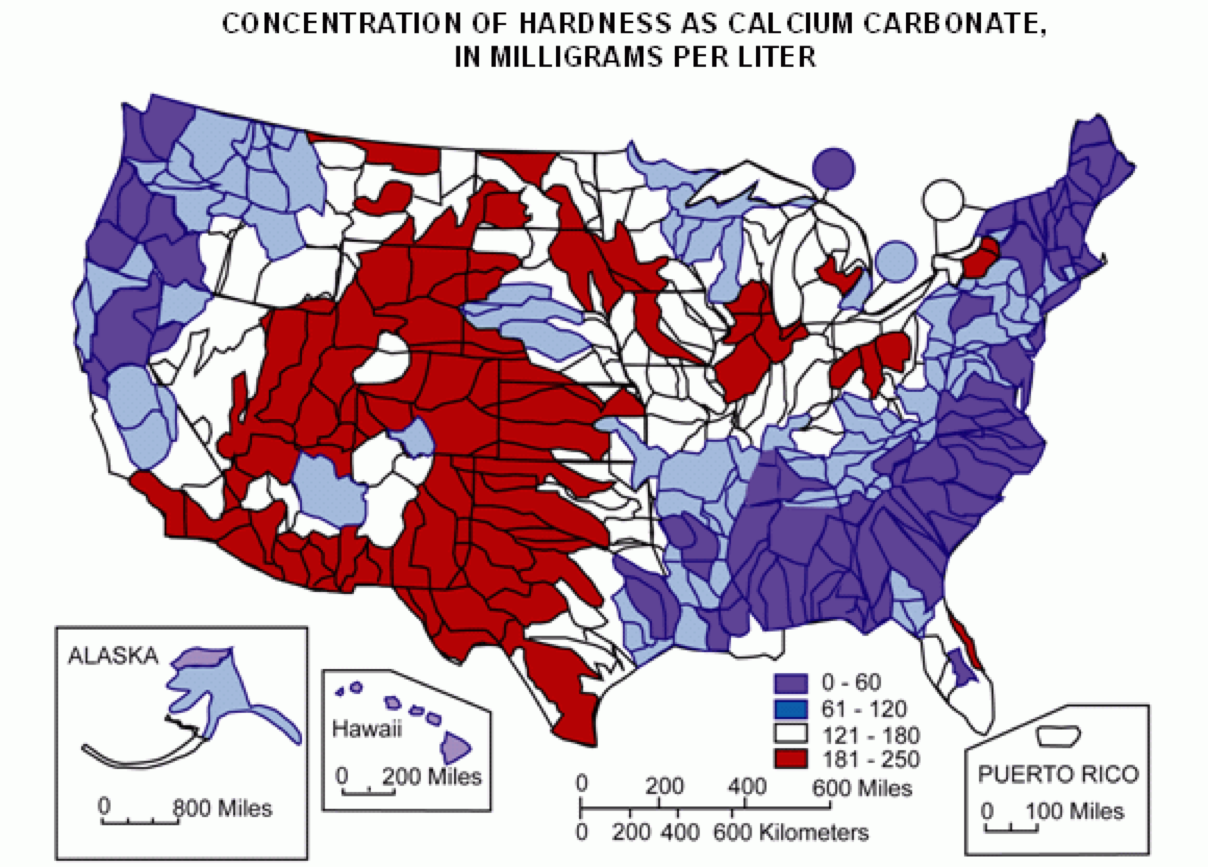
Most — around 85% — of the water available from taps around the United States is hard water. Its origin? Rain.

As rainwater soaks into the earth and makes its way into wells, its movement naturally cleanses and purifies it. On its way, it collects minerals from the earth and rocks through which it passes — minerals such as calcium, magnesium, and lime.

These minerals bind with the soaps we use, and help dissolve them. Also, most people prefer the taste of hard water. Yet while hard water has its good points, it also leaves us its hallmark residue: think lime scale in a tea kettle.

Common Hard Water Complaints…

Years of washing with hard water can bring accumulations of lime scale. Additionally, clogs in the basin, tub, and shower drains may happen more often than they would in an area with soft water.

With hard water, your dehumidifier, water heater, and faucets all may be subject to a lot of sediment buildup. Very hard water can leave deposits that gradually corrode pipes. If untreated, hard water ultimately causes major home appliances to become less efficient, guzzle more energy, and even leak.

A water heater can be especially vulnerable to long-term damage caused by water with a heavy mineral content.

…And Solutions

Most people looking to address hard water issues have a water softener installed at the point of entry to their homes. A water softener filters your home’s water through resin that takes out the hard ions. Some models are self-cleaning. Others require a cleaning to address the buildup of minerals accumulating over time.

Homeowners with hard water take a variety of other measures, such as using a mix of white distilled vinegar and baking soda in drains, followed by a pot of boiling water, to wash out clogs in the making. Or they might buy detergents made especially for use in areas that have hard water. To prevent the buildup of scale on your appliances, add vinegar into your dishwashing cycle and your clothes washing machines. Vinegar is great for washing coffee makers and anything that runs on hard water.

Calcium and magnesium ions in the hard water mean soap is quickly dissolved and you might get more of a soap scum than good, sudsy lather. As sodium counteracts the mineral in hard water, it’s possible to adjust your bathwater to your liking by adding bath salts. You might find the adjustment enables you to get a fine bubble bath.

What Makes Soft Water Different

Now, soft water. Soft water never took that rocky path. It was, instead, taken straight from rainwater collection basins or from lakes and rivers.

Soft water tends to be a great at washing and rinsing dishes and clothes, and it leaves your skin silky after bathing. It won’t leave deposits in appliances and pipes. Everything in a home that’s associated with water — kitchen and AC appliances, fridges, washing machines, and pipes — are easier to maintain and will function more efficiently throughout their useful lives.

On the other side of the coin, soft water will lack that desirable, refreshing mineral water taste that hard water offers.

And without the calcium and magnesium, soft water really does have a “soft” or less abrasive quality. If you’re not used to it, it can feel filmy (people who like it call it “silky”). So, for example, if you typically bathe with hard water, and you visit a place with the soft water, it might seem your hair isn’t as clean after shampooing.

Common Soft Water Complaints and Solutions

Soft water tends to be high in sodium, and obviously that’s less desirable for people who need to restrict their sodium intake. Additionally, the plants won’t care for it much. For outdoor water, hard is better. Most irrigation water bypasses water softeners for just that reason.

If your concern is sodium intake, you can shop for a reverse osmosis water purification system for your household drinking water. These devices are designed to remove not only the sodium but also several other problematic chemicals from your tap water. Reverse osmosis devices can even be used with your ice maker. And some people consider them a great benefit when used with a humidifier to take the dryness out of household heating in the winter. These devices do not replace water softeners; the two can work together.

Methods for Testing Your Water at Home

The bottle test is a great activity to do at home with the kids. Get an empty, capped plastic bottle. Take off the cap. Run water into the bottle until it’s half full. Now put a few drops of dishwashing liquid into the water. Shake it up and you’ll see a bubbly foam. If the sudsy foam lasts, you have soft water. If it disappears, you have hard water. Here’s a brief video to watch with your kids, to really get into the chemistry!

There are also water testing kits on the market. The kits contain a bottle and solution that you add with water and shake according to the instructions on the label. Drop by drop, you add the solution into the water, shaking as you go, until you get a certain level of sudsy foam. The test lets you know whether your water is soft, slightly hard, or hard enough to warrant a water softener.

Help for Your Pipes

Getting ahead of problems by testing your water and addressing troublesome effects makes good sense. The rewards? Gentler electricity use, more efficient appliances, maintenance-free winter heat, and certainly fewer pipe problems. Homes that have relied for years on hard water may need the pipes professionally cleaned and the scale buildup removed.

Unsure about your water quality? Concerned about preventing or addressing water-related issues? Give us a call today. We’re here to help. Contact our knowledgable team today online or call 707-263-1629.

Resources:

Image: U.S. Geological Survey (U.S. government image, identified as public domain here).

Show Technology Productions

Popular Mechanics

Water conservation is something that is extremely important in California. As a homeowner, reducing the amount of water you use each month can help you to go green and lower your utility bills each month. And while the majority of California homeowners will quickly call a plumber in the event of an indoor plumbing issue, most will put off an outdoor plumbing problem for weeks at a time. This bad habit can not only end up costing your family more in the long run but it can also create a spike in your water usage.

If you think about it, a problem with your sprinkler system can be devastating for your lawn or even result in an injury if it ends with a water explosion. And while a sewer blockage may begin outdoors, if it is left alone, it will lead to a number of horribly inconvenient indoor issues as well. In addition to regular summer and winter maintenance, one of the best ways to conserve more water and prevent a major plumbing issue is to invest in “green” outdoor plumbing. With this simple step, plus a few changes to how you normally approach water usage during the summer months, you’ll be on your way to enjoying the season and doing your part to keep the water flowing.

Time to Call the Plumber: Major Outdoor Plumbing Issues You Should Avoid

1. Sewer Blockage

The sewerage system is an intricate network of piping that is designed to carry wastewater from your home underground. Every time you use a sink in your home or flush the toilet, this wastewater is carried away down into the sewerage system. Some basic signs that you may have a sewer system issue on your hands include:

  • Water backup in sinks or toilet
  • A gurgling sound coming from drains
  • More than one drain clogs at once
  • Toilets aren’t flushing normally
  • Bubbles are coming up in sinks throughout the home

Everything from improper disposal to tree roots and bad pipes could lead to sewer blockage, so remember to contact your local plumbing experts to take a look at the issues as soon as possible.

2. Sprinkler Issues

Investing in a sprinkler system is a great way to help keep your front and backyards looking great while conserving water and avoiding the chore of watering on your own. If you have a kitchen garden or a large lawn, a sprinkler system can be a life-saver. But sprinkler systems are also notoriously difficult to maintain.

Sprinkler systems are prone to damage and if not properly maintained by homeowners, they can cause a world of trouble during the summer months. As a homeowner, it is very important that you keep a close eye on the sprinkler heads in your yard as you attend to your other lawn care duties or play with your family. This is especially important because a small leak in the system can lead to a huge problem if you don’t catch it quickly. While you can get in some DIY action and dig up the area around a broken sprinkler head to try to resolve the issues, chances are you’ll need professional assistance to put things back in order.

3. Problems with Hose Bibs

Even if you decide against a sprinkler system in your yard, you and your family will need to use your hose bibs every now and then. Hose bibs work to supply water to your outdoor plumbing fixtures and because they are used quite often they are also prone to damage if not maintained properly. These simple plumbing connections often break due to regular wear and tear and in some areas, can frost during a particularly cold winter.

Leaks and cracks in hose bibs can be a big nuisance and also result in a large amount of water usage over time. Additionally, this type of leakage can also lead to issues that affect your outdoor water supply. Replacing or repairing hose bibs may seem like an easy task because they are a relatively small working part of your outdoor plumbing system but just like most other plumbing jobs around the home, this task should also be left to the experts to avoid creating a larger issue.

How Can California Homeowners Reduce Water Consumption During the Summer Months?

The state of California has been experiencing a drought for several years now and because of this, it’s important that all residents do what they can to conserve water. While some may think that conserving water is easier said than done, there are plenty of small ways that you can help out. In addition to regular plumbing maintenance and care, check out these simple ways that you and your loved ones can help save water this summer:

Water Your Yard on Schedule

While many towns and cities across the state already have watering restrictions in place, you can start a trend in your area by maintaining a gorgeous summer lawn and watering less-frequently. That’s right, by keeping a simple schedule that only includes watering during the early morning hours or the evenings, you’ll get better results and help save water. Additionally, make sure that you are actually watering your lawn and plants instead of wasting valuable water on the sidewalk or your fencing!

Upgrade Your Landscaping

One simple and effective way to reduce the amount of water you use annually is to remove your old, thirsty turf grass and plant a garden full of beautiful and drought-resistant plants. This method of “xeriscaping” allows homeowners to enjoy healthy and gorgeous yards that require very little or no irrigation. Not only does this type of landscaping look great, it means that you and your family don’t have to waste time watering or mowing all summer long!

Shorten Your Showers

As the temperatures heat up, you may be tempted to spend more time in the shower but shaving just 2 minutes off of your morning shower can help to save up to 1,750 gallons of water each year. Not sure you can limit the number of showers you take this summer? Then try turning off the water in your shower whenever you soap up or shave. Installing water-efficient shower heads and faucets throughout your home is another simple way of reducing your overall consumption.

Go Green and Save Water This Summer with Benjamin Franklin

As your trusted local plumbing experts, we want to help you and your family enjoy a safe and happy summer while saving water. If you notice any outdoor plumbing issues or you simply want more information on safe water conservation, contact our friendly and knowledgeable team online today or give us a call at 707-263-1629!

Resources


And When to Call a Professional Plumber

Most of us would love to save money whenever we can.  When it comes to plumbing, however, it’s generally better to call in the professional; especially when you may be in over your head or you just don’t have the time.

Some of the smaller plumbing jobs, however, can be done at home without the risk of causing a massive flood.  Here are 5 plumbing tips that you can use in order to get the plumbing job done.  When it comes time, however, Benjamin Franklin Plumbing is here to serve all of your Lake and Mendocino County plumbing needs.

Know how to Keep Sewer Lines Clear of Root Issues

If you live in a house that’s over 40 years old, your sewer lines are prone to tree root damage.  As the trees mature, their roots go deeper and seek out water.  What’s the wettest area around your house?  Probably that aging pipe that is transporting all the wastewater to the city sewer!  Fortunately, there are no tools required to keep this line clean.  There are a few different brands of root killer which you can flush down the toilet.  This foaming compound enters into the pipes and grabs on to the tree roots that are creeping through the pipes.  It kills the ends, and creates a bond so the roots won’t grow back any time soon.

Why most DIY Sewer lines will require a professional plumber

Root killer is a preventative measure though.  If you haven’t been keeping those pipes clear, you will need someone to clean out the sewer pipes first so that everything can function just how it’s supposed to.

Know how to Replace a Shower Head

Tired of your old shower head?  Or do you have one that dumps out far too much water and you want something to help keep utility costs down?  Replacing a shower head is one of the simpler plumbing jobs you can do.  Using an adjustable wrench, simply unscrew the old fixture, clean the threads, wrap with plumbing tape, and screw the new fixture back on.

Why a professional plumber is a better option to replace a shower head

When you’re working with the pipes there is always the chance that you could do some damage.  Even though it’s a simple job, you may want to have a professional plumber come by to ensure it all goes smoothly.

Know how to Stop a Constantly Running Toilet

A toilet that won’t stop running is pretty annoying.  But do you know how much water you’re wasting?  Your running toilet could be draining thousands of gallons of water each month; costing you hundreds of dollars per year.  The repair is often little more than a minor adjustment on the components.

Take the back off the toilet tank.  Most running toilet problems are due to a damaged or warped flapper.  Turn the water off to the toilet, and then flush to clear the water from the tank.  Remove the old flapper and install a new one.  But what if it’s not the flapper?  If the toilet is leaking through the overflow, simply adjust the float just turn the float adjustment so that the water stops about 1 inch below the overflow tube.

Too many trips to the hardware store can save you a lot of time if you hire a professional plumber

Toilets aren’t actually as complicated as we often think they are.  But they can be overwhelming if you don’t know quite what to look for.  Combine that with multiple trips to the hardware store because there are so many different parts means a plumber can save you a lot of time when stopping a running toilet.

Know how to Turn off the Water to the House

Many houses are getting older, and so are the pipes.  Those pipes will eventually wear out and fail.  What do you do if one breaks and water is shooting into the house?  First, turn the water off!  After that, call the punctual plumber to get the problem taken care of.

Near where the water comes into the house, there will be a water meter and a water shut-off valve.  Most are a quarter turn ball valves.  When the handle is in-line with the water pipe, the water is on; when the handle is perpendicular to the water pipe, the water is off.

If you find it hard locating the main water pipe shut off you will be better off calling a plumber

Prevent as much damage as possible by killing the water to the house quickly.

Know how to Clear Out a Slow Shower Drain

One of the worst feelings in the world is to be taking a shower and the water starts to pool up around your feet.  That slow drain is generally caused by hair going down the drain and getting stuck.  The clog is worsened when soap latches onto the hair creating a big gunk of a mess.

There’s no need to rip the whole drain apart.  Instead, grab a zip it drain cleaning too and push it into the drain.  The “teeth” will slip into the drain easily, and grab the hair on the way back out.  The mess that was slowing your drain is cleared out in just a couple of minutes.  Note: not for the faint of heart!  The gunk pulled from the drain can be pretty gross.

That hairball you pull out might solve the issue… but the issue might be further down the pipes.  In order to really get things cleaned up, a plumber will have to come and “snake” out the drain.  That’s where we can help.


Call a Plumber if You’re Not Comfortable

These 5 DIY plumbing tips aren’t the most difficult tasks, but what if it’s a bigger project you want to take on?  Whenever you tackle a DIY plumbing project you have to keep a few things in mind.  First, do you know how to do the entire project the right way?  If not, find a plumber near you.  Second, will you be able to do the job without messing anything else?  If not, a plumber can.  Third, do you have time to tackle the project?  Most of us are busy, if you don’t have time, your local plumber will save you the headache.

Benjamin Franklin Plumbing serves Lakeport, CA and the surrounding areas.  We offer emergency plumbing services for all of Mendocino County and parts of Lake County.  Give us a call at 707-263-1629 to schedule your service.

Natural gas provides an excellent way of fueling your home with clean energy. Installing a gas line is a process that should be carried with due diligence and attention to details. Regular, maintenance and repair ensures prolonged use of the line and helps you avoid exposing your household and neighbors to the hazardous effects of a poorly maintained gas line

Here are six things all homeowners need to know before installing or repairing their gas line.

1. The drawbacks of using natural gas as fuel

You should not opt for gas line installation until you understand the limitations of what you are getting into. The primary weakness of this gas fuel is that it is highly flammable. Therefore, a small leak in the line poses a fire hazard to your home and those around you.

You can take care of this drawback by having your gas line installed by a professional company, like Benjamin Franklin Plumbing. However, if you choose to DIY, then get all the information you need about the system. It may take you a lot of time and yet not guarantee you the safety that experts do provide.

2. The use of the gas line

People install a gas line in their home for different reasons. Ask yourself if you are installing the system for cooking, heating the patio or swimming pool. Your type of usage will determine whether to do it yourself or employ a contractor.

Again, it affects the type of material, especially size of the pipe that you can use in the process. Gas line for cooking purposes, for example, can be connected directly to the grill without first filling the gas tank. You may not even need the gas tank. However, only an expert contractor can install such a system safely.

3. The appropriate type of gas line pipes

Iron pipes have been used for several years in gas lines. They are, however, being replaced by flexible pipes. The new generation pipes are made of corrugated stainless steel tubing, CSST. They have proved to be safer, efficient and are not as labor intensive as the traditional iron pipes.

A flexible gas line is commonly used to supply natural gas to gas fireplaces, furnaces, stoves, and other appliances. Their installation involves minimal labor, as they are easy to cut into required lengths. Again, you do not have to cut several 90-degrees T-connections for every change of directions. You just bend the tubing. The reduced number of connections provides significant protection against leakages.

Even more, CSST pipes are permitted in all local and state building codes.

4. Sizing and fitting requirement

You are not ready to start repairing or installing a new gas line until you understand the fitting needs. What length of pipe do you need? What is the diameter of the pipe? Answering these questions will give a glimpse into how much it will cost you to repair or install the line.

The simplest way of determining the length is by first settling on where you will connect to the supply line and the location of your appliances. The distance will give you a rough estimate of the length of the necessary pipe. Using a flexible pipe will shorten the required length of material as it makes it easier to maneuver around obstacles.

Determining the proper diameter of the pipes is a decision that you should let the experts help you make. It is because it depends on several variables besides distance. The usage and the pressure of the supply line are some of the additional factors that affect the diameter of a gas pipe.

5. A gas regulator

It is a must-know for all homeowners who plan to install or repair a gas line. A gas regulator is a controller sort of in a natural gas system. It serves two main safety purposes:

Gas line monitoring: It is the primary purpose of the regulator to monitor the pressure and the heat in the gas line. It has sensors such as thermostats, which relay the heat levels in different appliances. It also has pressure transducers that monitor the pressure required by the connected appliances and that of the supplied gas.

Pressure regulator: Gas companies usually supply gas at very high pressure to enable it to travel long distances. The pressure, however, is not fit for residential use. It would cause fire, suffocation, and explosion if not reduced to proper levels. The regulator reduces the pressure to a level that can be safely used in the home.

6. Testing new installation and repairs

It is essential to understand how you will be able to know that the work done by your plumber is safe. Leakage is the most important thing to test. The simplest way of doing this is by applying a bubble solution over the gas line. If there are no bubbles, then your system is good to go. Otherwise, you may have to redo the installation.

If the leak is caused by a simple problem such as a loose joint, then you can go DIY. Large cracks in the pipe and broken valves will require the experience of professional plumbers.

7. How to hire a professional company

Gas lines are so sensitive to let their installation and repair in the hands of quacks. You can only DIY if you have adequate knowledge in the process. Your best option is to give the job to a professional company, like Benjamin Franklin Plumbing, that has both the training and experience in this kind of job. While it may cost more than doing it yourself, you will be assured of the most important thing, safety.

Here are four tips on how to find a reputable company to handle your gas line installation and repair jobs.

Qualified staff: By installing a natural gas line, the life of your family and neighbors hangs on the expertise of the installer. Any company that seems not to have qualified staff on its payroll is a no-go zone.

The materials used: The suitable company for your gas line installation should be one that insists on using quality materials. While this will affect the price, it is the only guarantee of safety and durability.

Takes no shortcuts: Some contractors take shortcuts to minimize costs and reduce the time spent on the project. Such contractors also use substandard flexes, valves, and dirt lines. Choose a company that is willing to put their feet down to ensure quality.

Guarantee of service: You need a company that can stand by its work. Such companies provide warranties on their services. Select a company that you can call anytime you have a problem with your gas line.

Conclusion

Natural gas is an excellent way of heating your home. However, it is a safety-sensitive system that requires carefulness to install and repair. Opt for professional services if you need quality work and peace of mind with your gas line.

Benjamin Franklin of Lake and Mendocino Counties has the expertise needed to safely and reliably install and repair gas lines. Give us a call at (707)-263-1629 or visit us online at Benjaminfranklinplumbingmendolake.com.

*We have 24/7 emergency services available in Lake & Mendocino Counties

Toll Free: (877)-236-1776.


You have probably heard of hard water, and how bad it is for you and your home. Hard water is common in many areas of the country, and it is indeed problematic for many areas of your home. It leaves spots and stains behind when you try to clean with it, it reduces the effectiveness of your appliances, and makes you use more energy because of those inefficient appliances. You certainly do not want to drink it, as it tastes terrible. So, how can you tell if your house has hard water, and what do you do about it?

Here are some signs that your house may have hard water:

Your dishes and glasses never look quite clean

Whether you wash them by hand or use the dishwasher, your dishes and glasses always have spots on them. They keep reappearing every time you try to wash them off, and eventually result in mineral build-up that you can’t wash off at all. You’ll have to replace your dishes and glasses to get them to be clean once more.

It’s the same way in your shower

You will get those same hard water spots on the walls and door of your shower (if your shower has a glass door). With repeated use, those spots become a white-ish film that just can’t be scrubbed away.

Your clothes are always dirty

This is true whether or not you wash them. Assuming you do wash your clothes, hard water will cling to them, making the clothes look dingy and dull. Sometimes, it can even leave noticeable stains on lighter colored or white clothing. If there is iron in your hard water, those stains may be yellow or orange, and they don’t wash out, ever. The only solution is to replace your clothing.

Your water bill is higher than it used to be

It usually gets higher every month, too. Unless you have a well, you are going to be paying more for water with hard water, because the minerals in hard water build up in your hot water heater and make it work harder. Eventually, it will break because of the hard water, and you will have to replace it.

It is obvious that hard water is an issue you want to take care of right away. So, how do you soften hard water?

Hard water isn’t something you can simply call your water provider and request to switch away from, because hard water is what is in your area’s water table. So, you have to change the hard water to soft. There are a few different ways you can do this at home.

If you want to soften your drinking water to make it taste better, you have to boil it. Take the amount of water you want to

drink, boil it for a few minutes in a clean pot, then transfer the boiled water to a clean container after you have let it cool. There is usually a white film at the bottom of the pot after boiling, because of the hard water minerals. Scrub the pot immediately to get as many of the minerals off of it as possible. Once the water is completely cooled in its container, get another empty one, and pour the water back and forth between the containers a few times. This re-oxygenates the water and makes it taste better.

If boiling water every time you want to drink it is a nuisance for you, get a filter to attach to your faucet, or one to put in a pitcher. When the water goes through the filter, the filter removes the minerals and makes the water taste good. Faucet and pitcher filters are generally inexpensive and effective at what they do.

If you want to soften the water in your shower, a filter will also do the trick. You can get bathtub filters for a tub faucet, as well as shower head filters. These filters will not only keep your tub and shower clean, they will make your hair shinier and your skin softer. This is because the minerals from hard water linger on your hair and skin after a bath or shower, making them dull and dry. A filter to soften your water will actually improve your appearance by keeping these mineral deposits off of you.

The minerals in hard water can sometimes smell bad at high temperatures, such as in the shower, so using a filter will also produce a more pleasant shower experience by eliminating the bad smell of the minerals.

Softening the water in your laundry is pretty simple. It involves putting a half cup of baking soda in your washing machine along with your clothes. Put the baking soda in first, and then your clothing. Add detergent as normal and wash as usual. The baking soda won’t remove the minerals, but it will make the water softer, and softer water cleans better. When it rinses your clothes, the softer water will take the minerals down the drain with it, instead of leaving it on your clothes. This way, your clothes will be cleaner.

Baking soda also helps clean your clothes because it is mildly abrasive, which removes dirt. This makes it both a water softener and a booster to your detergent.

If doing these things individually is too much trouble for you, you can always choose to soften the water in your entire house. This is done by installing a whole house water softener. Installing them and getting them to work properly on all of your faucets and water-using appliances is tricky, which is why they are usually installed by professional plumbers. You can purchase a whole house water softener at hardware stores and home improvement stores. Some plumbers have water softeners they prefer in stock and will sell them to you directly when they come to do the installation.

In fact, a plumber is the best choice for installing a water softener, because the plumber can test for which minerals are in your water, and choose a softener for you that is the best for your needs, based on those minerals. Not everyone with hard water has the same minerals, and the best water softeners specialize in which minerals they remove from your water. Your plumber can tell you the water softener that will work best at your house.

Finally, your plumber will instruct you on how to use and maintain your water softener. Most require little maintenance. If you are using one that requires salt or a cartridge, your plumber will let you know how often to put in new salt or to replace the cartridge. With a professional plumber, you will have the soft water you deserve, with no hassle.

If you are noticing signs of hard water in your home, call the professionals at Benjamin Franklin Plumbing. We serve Mendo Lake, CA and surrounding areas and have professional plumbers that are trained in diagnosing and treating hard water. Give us a call today at (707)-263-1629 or toll free at (877)-236-1776.